
Ricoh to establish manufacturing capabilities to advance mass production of inkjet-printed perovskite solar cells
Project selected for Japan’s GX Supply Chain Development Support Programme
TOKYO, October 27, 2026 – Ricoh Company, Ltd. today announced that it will establish manufacturing capabilities for inkjet-printed perovskite solar cells as the company moves toward mass production. The company will build a production site at Ricoh Industry Co., Ltd.’s Tohoku Site in Miyagi Prefecture, Japan, and aims to achieve an annual production capacity of several hundred megawatts (MW) by 2030, with future expansion to gigawatt (GW)-scale production.
Ricoh’s perovskite solar cell manufacturing initiative has been selected for support under Japan’s GX (Green Transformation) Supply Chain Development Support Program administered by Japan’s Ministry of Economy, Trade and Industry (METI).
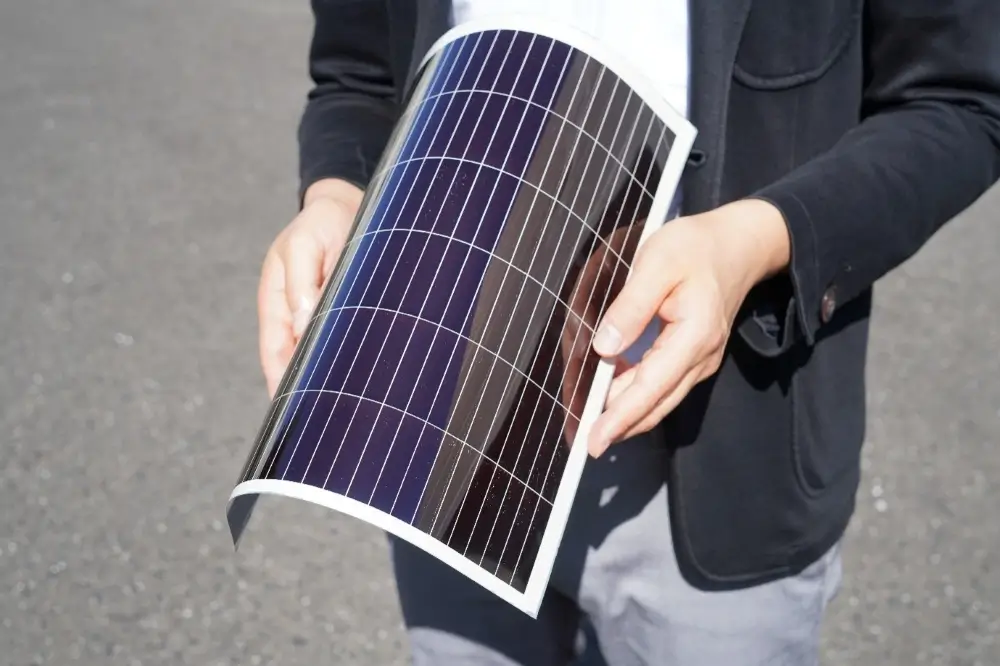
Ricoh leverages its inkjet technology, which enables precise deposition of the right amount of material exactly where it is needed, to form all functional layers of perovskite solar cells. This enables efficient material utilisation and streamlines manufacturing processes, with the aim of improving productivity and reducing manufacturing costs.
As part of its medium- to long-term growth strategy, Ricoh is advancing the commercialisation of “Functional Printing,” which applies inkjet technologies developed through its commercial and industrial printing businesses to manufacturing processes such as the coating and deposition of functional materials. Inkjet-printed perovskite solar cells are one of the projects being pursued under this initiative. Following this selection, Ricoh will build on its research, development, and demonstration activities to advance toward mass production and commercialisation, with the aim of expanding the real-world deployment of perovskite solar cells and creating new business opportunities.
1. Background
As the transition toward a decarbonised society accelerates and renewable energy adoption continues to expand, expectations are growing for perovskite solar cells due to their thin, lightweight, and flexible characteristics. These features enable installation on rooftops and walls of buildings with limited load-bearing capacity, where conventional silicon solar cells are difficult to deploy, expanding opportunities for power generation.
To achieve widespread adoption, however, in addition to improving power generation performance and durability, establishing technologies that enable stable-quality mass production and reducing production costs remain key challenges.
2. Establishment of manufacturing capabilities
Ricoh will establish a production site for the mass production of inkjet-printed perovskite solar cells at Ricoh Industry’s Tohoku Site in Miyagi Prefecture, Japan. The site will utilise a manufacturing process leveraging Ricoh’s proprietary inkjet technology. With future expansion to GW-scale production in mind, Ricoh aims to establish annual production capacity of several hundred MW by 2030.
Production site overview
- Location: Ricoh Industry Co., Ltd.’s Tohoku Site in Shibata, Miyagi Prefecture, Japan
- Product: Inkjet-printed perovskite solar cells
- Manufacturing process: Inkjet-based manufacturing process leveraging Ricoh's proprietary technology
- Target start of mass production: By 2030
3. Advantages of Ricoh’s perovskite solar cell technology
(1) Pattern-printing of all functional layers using Inkjet technology
Ricoh leverages its long-established inkjet printhead technology, ink supply technology, and printing system technology in the manufacturing of perovskite solar cells.
Inkjet technology enables precise control of microscopic droplets, allowing the right amount of material to be deposited exactly where needed. By leveraging this technology to pattern-print all functional layers of perovskite solar cells, Ricoh aims to improve material utilisation and streamline manufacturing processes, enabling high productivity and low-cost production.
(2) Organic photoconductor technology developed for multifunction printers
Ricoh has pursued research and development of organic solar cells based on organic photoconductor technologies developed through the innovation of its multifunction printers.
Technologies cultivated through these efforts are now being applied to perovskite solar cells.
Ricoh is leveraging its long-established inkjet and organic photoconductor technologies to enhance the performance of perovskite solar cells and establish mass-production technologies.
4. Progress to date and future outlook
In September 2025, Ricoh’s technology development and demonstration project for inkjet-printed perovskite solar cells was selected for support under Japan's Green Innovation Fund administered by the New Energy and Industrial Technology Development Organisation (NEDO).
Following its selection for Japan’s GX Supply Chain Development Support Program, Ricoh will build on the results of its research, development, and demonstration activities to advance toward mass production and commercialisation, with the aim of expanding the real-world deployment of perovskite solar cells. Ricoh will also contribute to strengthening Japan’s industrial competitiveness in the GX field.
In addition, the company will advance the commercialisation of Functional Printing utilising inkjet technology and cultivate new growth areas.
Related Information
Inkjet-Printed Perovskite Solar Cells technology page
Related News
News & Events
Keep up to date
-
09 Nov
Ricoh strengthens supply chain security for office MFPs and printers with ISO/IEC 20243 Self-Assessed conformance
-
27 Oct
Ricoh to establish manufacturing capabilities to advance mass production of inkjet-printed perovskite solar cells
-
14 Oct
Ricoh and ETRIA launch “Circular New,” a manufacturing concept, turning resource circulation into competitive advantage
-
22 Sep
Ricoh Named Among the Financial Times' “Best Employers Asia-Pacific 2026”